Your Cheapest F&B Marketing Channel
Why the pavement outside your hotel restaurant might be doing more to convert guests than your next paid campaign.
Hotel restaurants spend serious time and money on concepts, menus, interiors, uniforms, photography and launch plans.
Then a guest walks past the front door and has no idea what is going on inside.
That is the problem.
For many hotel restaurants, the decision to visit is not made on the website. It is not made on Instagram. It is not always made through a booking platform.
It is made from the pavement.
The kerb is where the guest decides whether the restaurant feels open, whether it feels right for them, whether it has energy, whether they can walk in, whether the price feels comfortable, and whether it is worth stopping.
That makes kerb appeal one of the most practical, immediate and cost-effective marketing tools a hotel restaurant has.
Not because it looks nice. Because it converts.
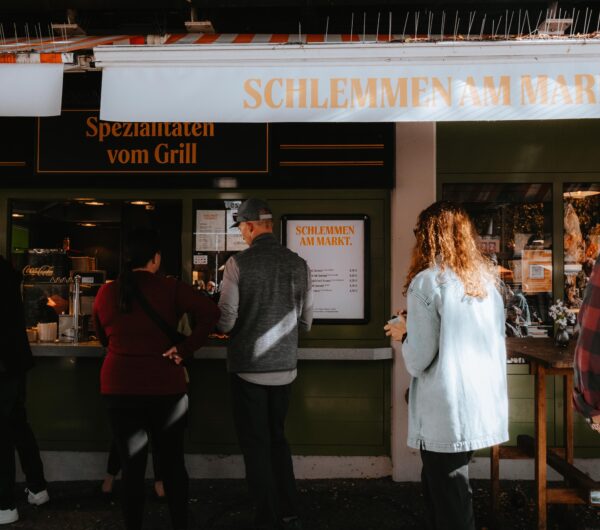
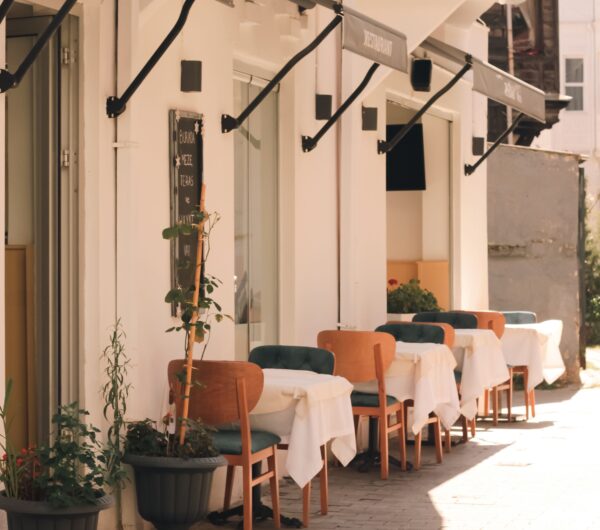
Guests Decide Fast
Guests look for signals.
- Is it open?
- Can I walk in?
- What kind of place is it?
- Is it busy?
- Can I see the menu?
- Does it feel welcoming?
- Does it feel like somewhere I want to spend money?
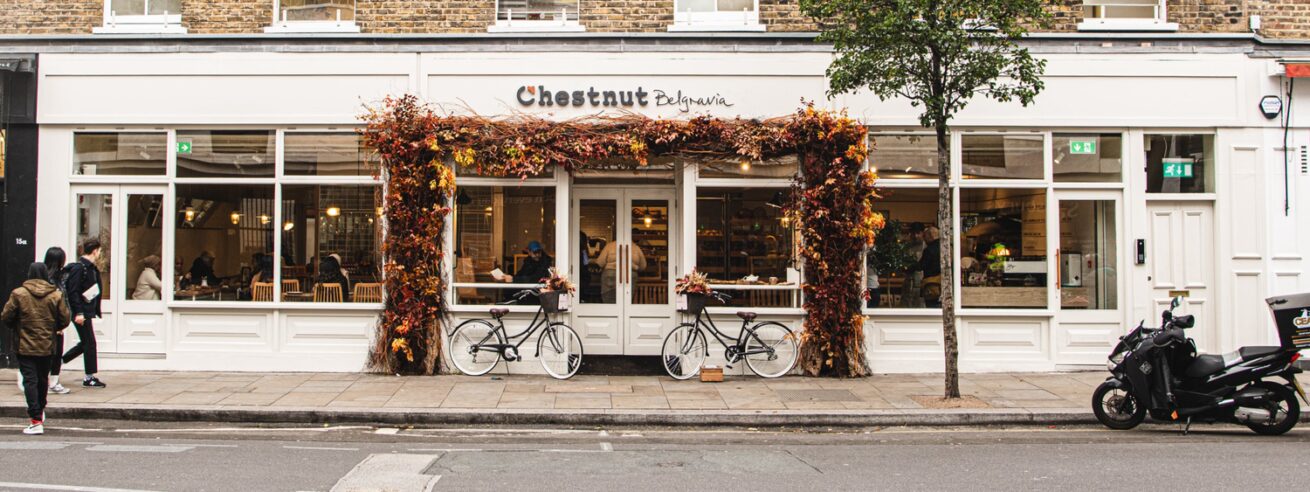
Standalone restaurants usually understand this. The frontage is their handshake. The awning, menu board, furniture, lighting, planters, A-board and window graphics all work together to say, “This place is alive.”
Hotels can forget this.
The restaurant might be excellent. The concept might be strong. The food might be brilliant. But if the frontage does not communicate clearly, the guest has to work too hard.
Most guests will not. They will keep walking.
Your Frontage Is a Window Display
Department stores understand the power of the street.
They do not leave windows empty and hope people understand the offer. They dress them. They light them. They change them with the season. They use them to pull people in before a conversation has even started.
Hotel restaurants should think the same way.
The restaurant frontage is not just the outside of the building. It is the first advert. The first brand touchpoint. The first conversion tool.
And unlike paid media, the opportunity is already there.
Awnings, furniture, lighting, menus, planting, A-boards, window graphics and small guest details can turn a passive frontage into an active one.
Done well, they make the restaurant easier to read. Done badly, or not at all, they leave the guest making their own assumptions.
Legibility Beats Mystery
There is a difference between intrigue and confusion.
Intrigue makes people curious. Confusion makes people nervous.
Many hotel restaurants hide behind discretion. The signage is too subtle. The entrance is unclear. The menu is not visible. The terrace feels like part of the hotel, not a restaurant in its own right. The guest cannot tell if they are welcome unless they are staying upstairs.
That creates threshold friction.
Threshold friction is anything that makes the guest hesitate before entering. It might be unclear access. It might be no visible price signal. It might be a lack of atmosphere. It might be a restaurant that looks closed from the outside, even when it is open.
Every moment of uncertainty costs trade Kerb appeal removes that friction. It gives guests the confidence to act.
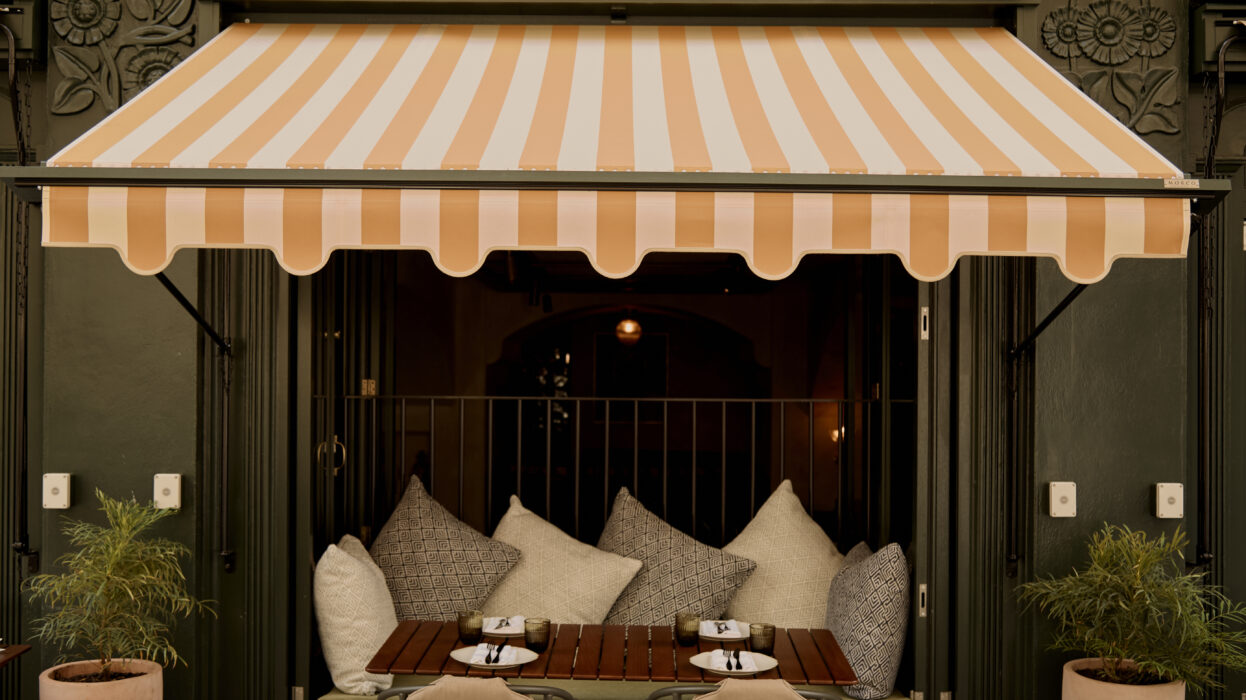
Awnings Frame the Offer
Awnings do more than keep off the rain.
They frame the frontage. They create identity. They make the restaurant easier to spot from a distance. They help separate the F&B offer from the wider hotel.
For hotel restaurants, that matters.
A strong awning can say, “This is not just the hotel entrance. This is a restaurant.” It can carry the name, colour, tone and personality of the venue without fighting the building.
It also creates comfort. It gives outdoor space a sense of shelter. It helps define where the restaurant begins and ends. It makes the terrace feel more intentional.
And comfort is part of conversion.
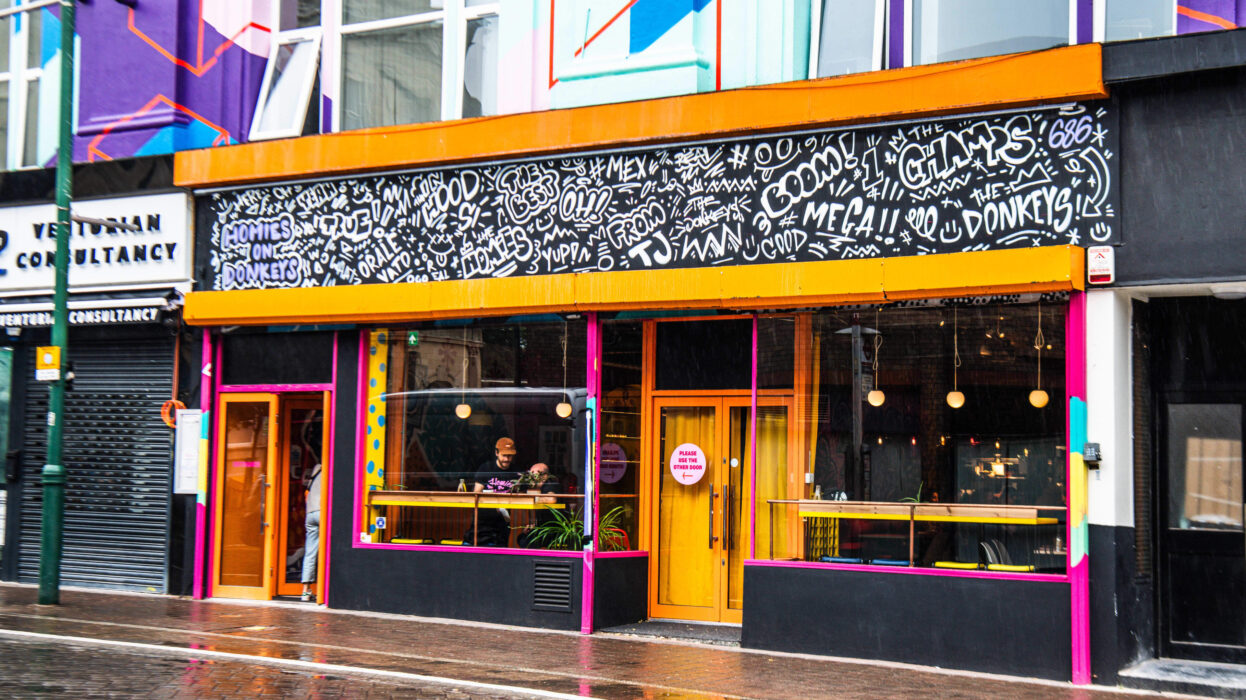
Furniture Sends a Price Signal
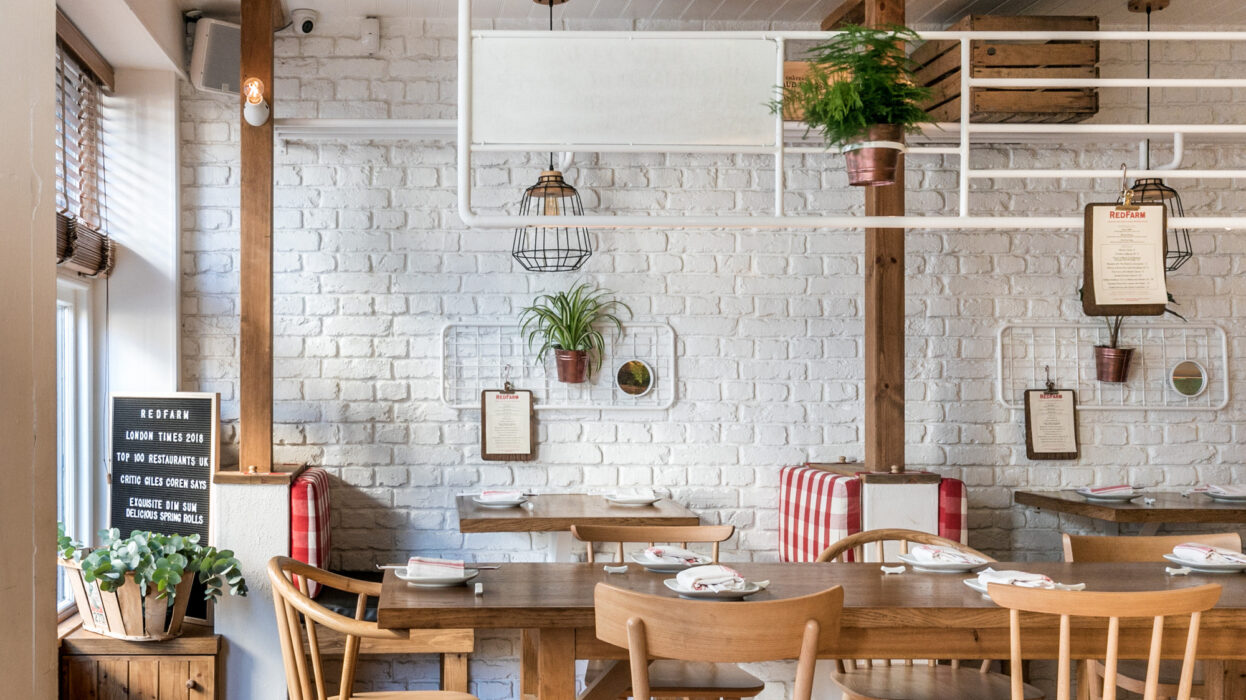
Outdoor furniture tells people what kind of experience they are about to have.
Cheap furniture says one thing. Well-chosen, well-spaced and well-kept furniture says another.
This does not mean every hotel terrace needs to look luxury. It means it needs to be considered.
A casual café, a wine bar, a brasserie, a destination restaurant and a hotel lounge should not all present themselves in the same way.
The furniture should help the guest understand the occasion.
- Can I stop for coffee?
- Can I have a glass of wine?
- Can I bring friends?
- Can I sit here for dinner?
- Can I come in without a reservation?
The frontage should help answer those questions before the guest asks them.
Small Details Make the Space Feel Alive
Blankets folded over chairs. Table lamps at dusk. Candles in the evening. Planters that are looked after. Menus that are clean and current. Heaters that work. Cushions that are not tired. A host who knows how to welcome passers-by, not just booked guests.
These are not small things. They are signals of care.
They tell the guest that the attention they can see outside is likely to continue inside.
They also create theatre.
A terrace with blankets and lights feels warmer. A pavement table with a carafe of wine and good glassware feels more inviting. A café window with visible pastry and movement feels easier to enter. A bar with low lighting and a few occupied seats feels more compelling than a dark room behind glass.
Activity is the signal.
Yes, Luxury Hotels Can Use A-Boards
Some hotels get nervous about A-boards.
They worry they will feel cheap. They worry they belong to pubs, cafés or high street restaurants.
The problem is not the A-board. The problem is bad execution.
A well-designed A-board can work in even the best hotels. It can carry a daily special, a terrace message, a breakfast cue, a bar moment, an afternoon tea note or a simple “walk-ins welcome.”
The point is not to shout. The point is to reduce uncertainty.
If the guest does not know they can walk in, tell them. If the terrace is open, tell them. If the bar serves food all day, tell them. If the restaurant has a brilliant set lunch, tell them.
Clarity is not the enemy of quality.
Menu Boards Help Guests Commit
Menus are decision tools.
A visible menu gives guests confidence before they step inside. It helps them understand price, style, tone and suitability.
It also avoids the awkwardness of walking in, asking for a menu, realising it is not right, and leaving.
Most guests avoid that moment entirely. They just keep walking.
A clear, well-presented menu outside the venue removes that barrier. It does not need to show everything. It can focus on the strongest hooks.
A great lunch dish. A terrace drinks list. A Sunday roast. A signature cocktail. A breakfast worth crossing the street for. A children’s menu that makes families feel welcome.
The best menu boards do not just inform. They tempt.
Find out more about Menu Engineering
True Menu Engineering Is Not About Food Cost
Window Graphics Should Work Harder
Windows are often underused. They are left blank, blocked with blinds or filled with generic vinyl that says very little.
Window graphics can do more. They can create rhythm along a frontage. They can carry the name, proposition or key message. They can add personality. They can make a hotel restaurant feel more like a standalone venue while still sitting comfortably within the hotel.
The key is restraint. Too much feels busy. Too little feels invisible.
The right balance makes the offer easier to understand without turning the building into an advert.
For listed buildings or sensitive locations, the answer is not always more signage. It might be better lighting, clearer sightlines, stronger host presence, smarter furniture or more visible activity through the glass.
Not Every Hotel Has a Street
Not every hotel has a prominent street-facing frontage.
Some restaurants sit inside the building. Some are reached through a lobby. Some have internal courtyards, gardens, terraces, rooftops or poolside spaces.
The principle still applies.
Kerb appeal is really about visible invitation.
If your restaurant does not face the street, where does the decision happen?
- The lobby?
- The lift landing?
- The garden entrance?
- The terrace threshold?
- The corridor from reception?
The same thinking can be used inside the hotel. Lighting, furniture, menu display, host presence, planting, scent, sound, product display and visual cues can all help a guest decide to stop rather than walk past.
Internal gardens and terraces have a huge opportunity here. They can feel more elevated, more special and more considered than the local bar down the road. But only if the guest can see, read and feel the offer before they arrive at the table.
Treat the Kerb Like a Commercial Asset
Kerb appeal is not about making things prettier. It is about making the restaurant easier to choose.
It helps passing guests decide faster. It gives hotel guests a reason to stay in. It makes locals feel welcome. It builds standalone identity. It supports walk-ins. It strengthens the first impression.
For hotels, this can be a huge advantage.
Many already have strong locations, beautiful buildings, busy streets, known neighbourhoods and built-in footfall.
The opportunity is there. The question is whether the restaurant is doing enough with it.
Your frontage is your shop front. Dress it. Light it. Activate it. Give it a reason to be noticed.
Because sometimes the cheapest F&B marketing channel is not another campaign.
It is the pavement outside your door.
More of what we’re talking about.