Can you systemise unforgettable hospitality?
What an evening listening to Will Guidara and Rory Sutherland taught me about memorable moments, human connection and doing things differently.
By Scot Turner, Founder of Auden Hospitality
21 October 2026
What if the moments that make hospitality unforgettable weren't left to chance?
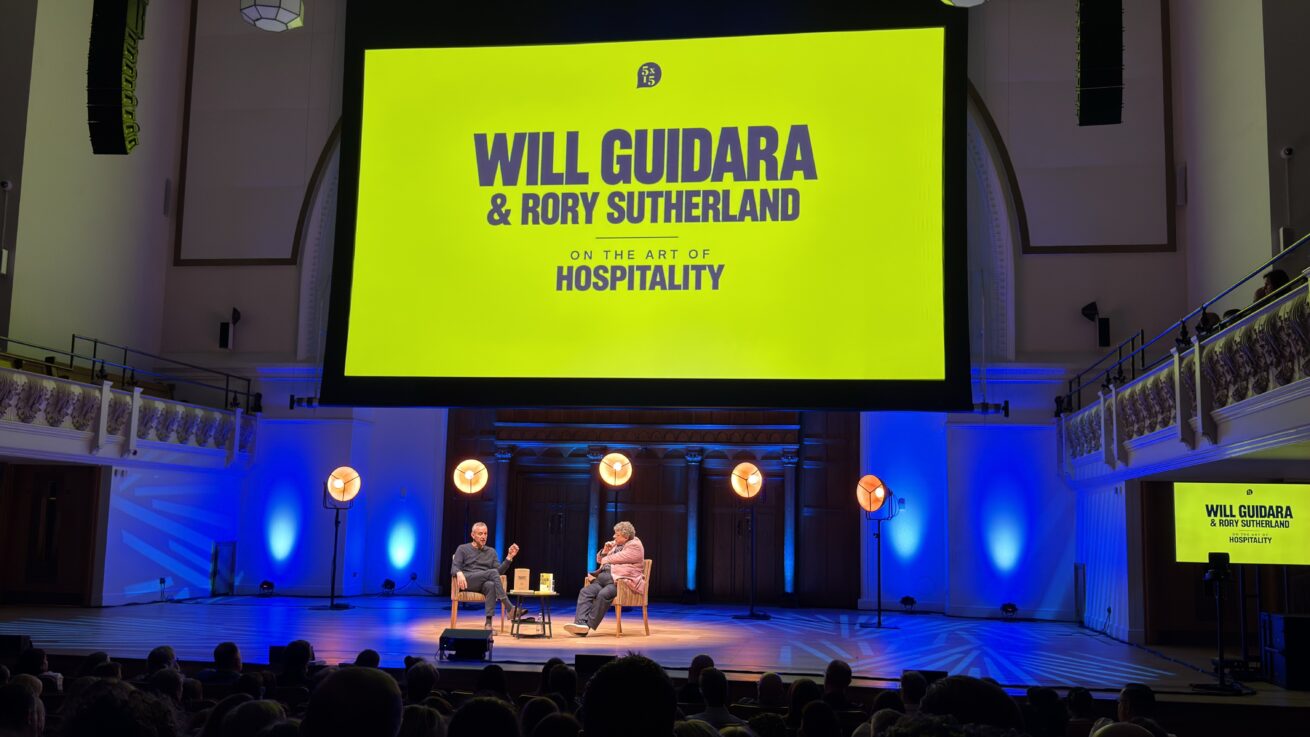
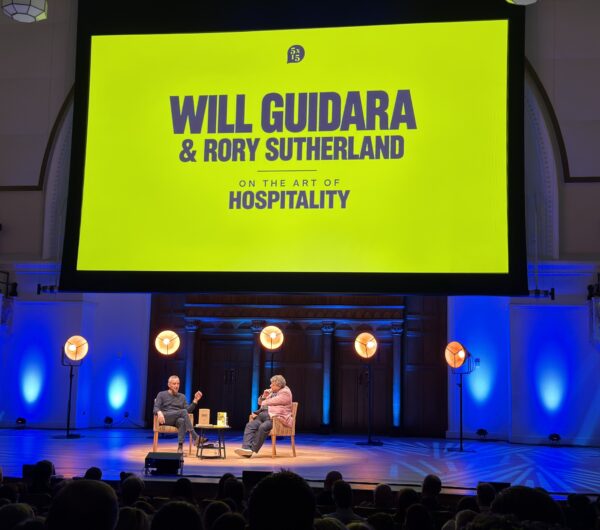
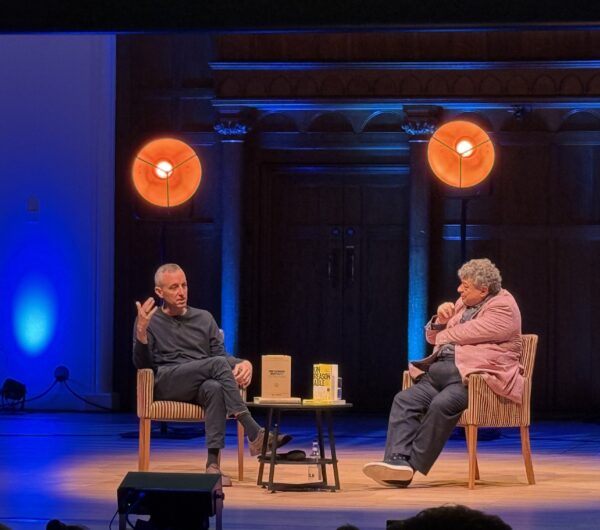
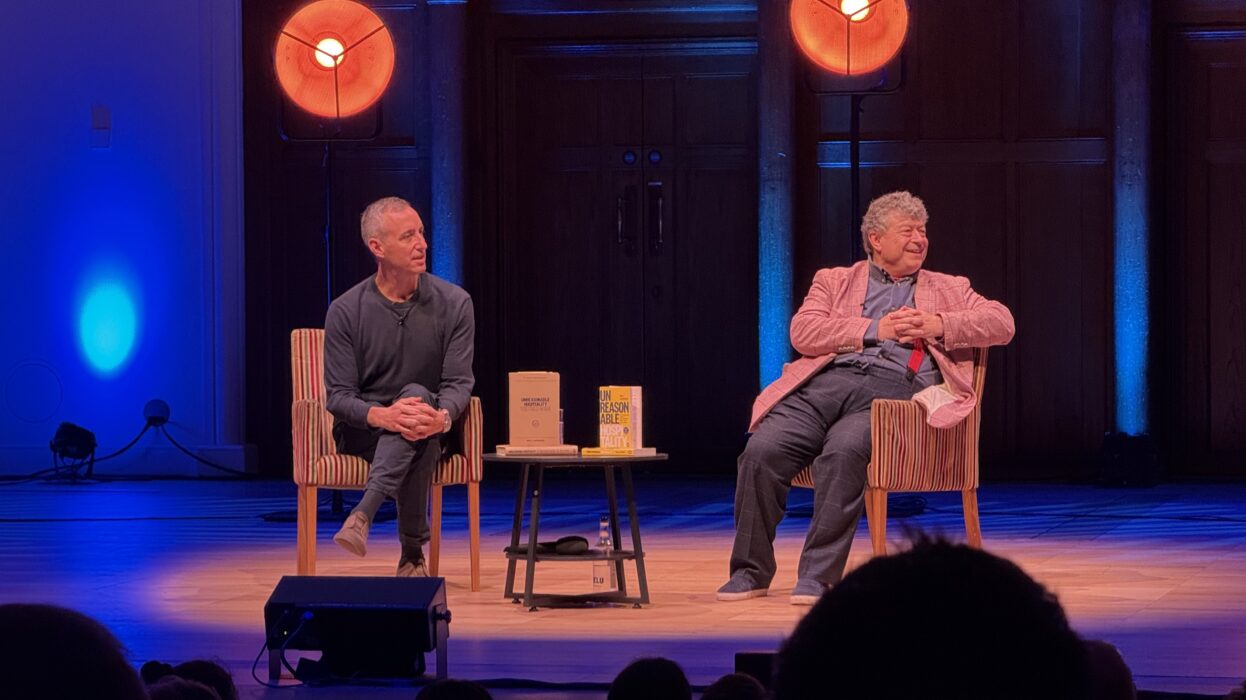
I've been thinking about it since spending an evening at Cadogan Hall in London, listening to Will Guidara and Rory Sutherland discuss the art of hospitality.
Will is best known for taking Eleven Madison Park to the top of the World's 50 Best Restaurants list. Rory approaches things from a completely different perspective, challenging how we think about value, behaviour and the decisions people make
Two very different minds, but a fascinating common ground.
I took plenty away from the evening, particularly around three things: creating memorable moments, giving passionate people the opportunity to lead, and looking at what your competitors aren't doing well.
But perhaps the biggest takeaway was that extraordinary hospitality doesn't always need extraordinary resources.
Sometimes it just needs someone to notice.
A glass of champagne, a Tiffany box and a brown paper bag.
During the conversation, Will asked the audience whether anyone had proposed to their partner in a restaurant.
A few hands went up.
He asked whether the restaurant had brought them a glass of champagne to celebrate.
Will explained that the team would serve celebratory champagne to guests who propose in the restaurant and, when they finished, take the glasses away, wash them, and package them in a Tiffany box for the couple to keep.
A simple gesture, but one that transforms a fleeting moment into a lasting memory.
The glasses themselves aren't particularly important. It's what they represent. A reminder of a special occasion, made more meaningful because someone had thought to do something unexpected.
Will continued asking people in the audience about their experiences until someone explained that their restaurant hadn't done anything to celebrate.
He made a joke about it, everyone laughed, and the conversation moved on.
Or so we thought.
At the very end of the evening, someone from Will's team appeared with a brown paper bag.
Will took out a bottle of champagne and presented it to the audience member whose proposal hadn't been celebrated, apologised on behalf of the restaurant, and suggested they enjoy it at home.
It was brilliant.
Not because of the champagne, but because he'd demonstrated the very thing he'd spent the evening talking about.
He'd noticed something, created an opportunity and delivered an unexpected moment of hospitality.
And he'd done it so naturally that none of us saw it coming.
“Systemising memorable hospitality isn't about scripting the moment. It's about creating the conditions for it to happen.”
He hadn't just told us how to create memorable moments. He'd made us part of one.
This one act made me wonder how far we can actually systemise moments like this and, in our projects, build them into our guest journey.
It is where I think the real opportunity sits for hospitality operators.
We spend an enormous amount of time systemising the functional parts of our businesses.
Service sequences, operating procedures, training manuals, quality standards, and endless checklists.
All necessary. After all, consistency is key.
But how much time do we spend thinking about how to consistently create moments that people remember?
The Tiffany glasses weren't simply a nice idea someone had one evening. They showed how to turn a thoughtful gesture into part of how a restaurant operates.
Will Guidara showed the same thinking at Cadogan Hall.
The gesture felt spontaneous, personal and entirely genuine. Yet behind it was an ability to recognise an opportunity and act on it.
That's an important distinction.
Systemising memorable hospitality isn't about scripting the moment. It's about creating the conditions for it to happen.
For a hotel, that might mean giving the team a small budget to create unexpected experiences, encouraging them to recognise special occasions, or making space in daily briefings to discuss opportunities to surprise guests.
It might be as simple as empowering someone to make a decision without having to ask three managers for permission.
None of this needs to be particularly expensive.
But it does need to be intentional.
And perhaps more importantly, it needs to be supported by the culture of the business.
You can't ask people to create extraordinary experiences and then give them an operating environment where every decision is controlled.
Stop looking at what your competitors do well.
Another part of the conversation that really resonated with me was Will's approach to competition during Eleven Madison Park's journey to becoming the world's number one restaurant.
When we look at competitors, we tend to focus on what they're doing particularly well.
We visit their restaurants, study their menus, analyse their interiors, and look for elements we might be able to improve.
We do this regularly when developing hotel food and beverage strategies.
But Will approached the challenge differently.
Rather than trying to beat the competition at their strengths, he looked for what they weren't doing particularly well.
Two examples he discussed were beer and coffee.
These areas weren't necessarily getting the same level of attention as other parts of the fine-dining experience.
And rather than treating these as secondary details, he saw an opportunity to make them a point of difference.
What I really liked was how he approached the solution.
He found people within his team who were genuinely passionate about those subjects and gave them the opportunity to take ownership.
It wasn't simply about introducing a better beer selection or improving the coffee programme.
It was about recognising an overlooked opportunity and putting the right people behind it.
I think there's a lesson here for us all.
Sometimes the opportunity isn't to do what everyone else does, only better. It's to do something everyone else has overlooked.
We see this frequently in food & beverage.
A property might invest heavily in a new restaurant concept but give relatively little thought to the coffee experience. Or create a beautiful bar without considering whether its drinks offer gives local customers a compelling reason to visit.
These details often shape how guests perceive the overall experience.
And they can become genuine competitive advantages when someone takes ownership of getting them right.
Give the people who care the opportunity to lead.
The other interesting element of the beer and coffee example was the role of the team.
Will didn't need to be the person who knew everything about either subject.
He needed to recognise the opportunity and find people who cared enough to make something of it.
That's a leadership lesson I think we could apply much more widely across hospitality.
We often recruit people into defined roles, give them responsibilities and measure how well they perform against those expectations.
But how often do we ask what they're genuinely interested in?
Perhaps the person working breakfast has an extraordinary knowledge of coffee. Perhaps someone behind the bar is fascinated by urban breweries. Or a junior team member understands emerging food trends better than anyone on the management team.
There's an enormous amount of knowledge and enthusiasm sitting within hospitality businesses that we don't always make the most of.
When people own something they're passionate about, the energy they bring is completely different.
For me, this connects directly to creating memorable hospitality.
You can't manufacture genuine enthusiasm.
But you can create an environment where people feel confident enough to share it.
Human connection is still the thing that matters.
One interesting contrast between Will and Rory's perspectives was the relationship between what something costs and what people actually value.
We spend significant amounts of money creating hospitality environments.
Beautiful interiors, expensive furniture, sophisticated technology, and carefully considered design.
And those investments matter.
But the moments people remember aren't always the most expensive ones.
A thoughtful gesture, a genuine conversation or someone remembering a small detail can create a stronger emotional connection than something that costs considerably more.
It's something I think we need to be particularly conscious of as the industry continues to focus on efficiency and productivity.
Those things are important. We need commercially sustainable businesses.
But efficiency shouldn't come at the expense of human connection.
In fact, I would argue that the purpose of better systems should be to give our teams more time and freedom to connect with guests.
Technology can help us work faster. Procedures can help us deliver consistently. Training can help build confidence.
But none of them should remove the personality from hospitality.
People might admire the design, remember the food or appreciate the service. But it's how we make them feel that brings them back.
“Sometimes the opportunity isn't to do what everyone else does, only better. It's to do something everyone else has overlooked.”
What am I taking away from the evening?
I left Cadogan Hall thinking about how easily we can become consumed by the mechanics of running hospitality businesses.
The budgets, the margins, the labour challenges and the endless operational demands.
They're all important, and none of them are going away.
But we shouldn't lose sight of why people choose to spend time in our restaurants, bars and hotels.
They want to enjoy themselves. They want to feel welcome. And occasionally, they want to experience something they didn't expect.
The champagne moment demonstrated how powerful that can be.
The beer and coffee example showed how looking at an opportunity differently can create a competitive advantage.
And both reinforced something I believe strongly: the best hospitality businesses give their people the confidence to make a difference.
For anyone running a hotel restaurant or bar, I'd encourage you to ask three questions.
- What moments could we create that guests would genuinely remember?
- What are our competitors overlooking that we could become known for?
- Who within our team has the passion to make those things happen?
The answers don’t require a huge investment.
They require curiosity, a willingness to challenge how things have always been done and the confidence to give people the freedom to try something different.
For me, that's what made the evening so valuable.
Not simply hearing how one of the world's best restaurants achieved success, but seeing how some of that thinking could apply to everyday hospitality.
After all, not every restaurant can be Eleven Madison Park.
But every restaurant can make someone feel special.
And if we can systemise great service, surely we can find a way to systemise the moments that make it memorable.
More of what we’re talking about.