How to choose art for a hotel or restaurant: Why artwork is part of your brand.
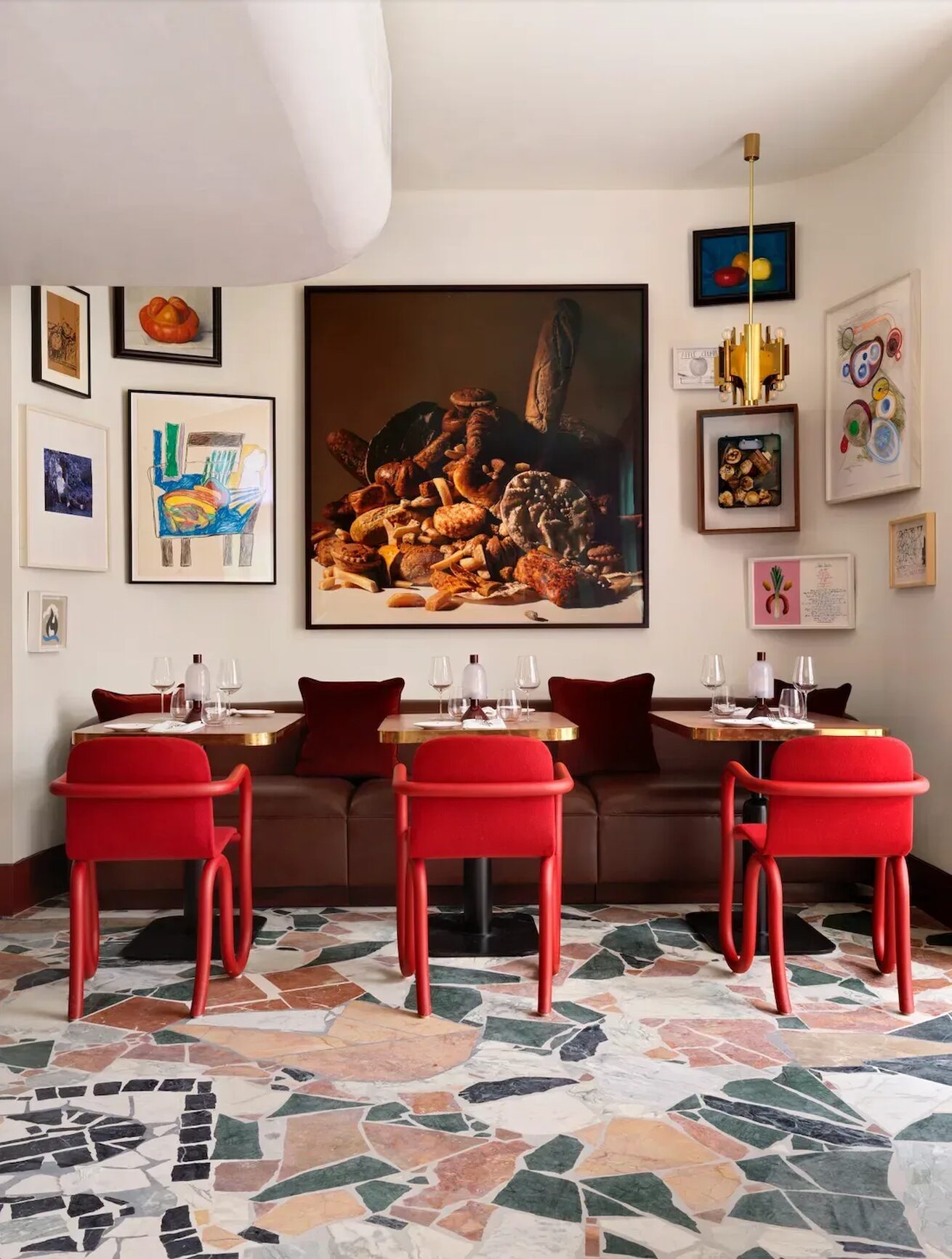
Artwork shouldn’t be the finishing touch to a restaurant or hotel refurbishment. It should be part of the story you’re trying to tell from the beginning.
By Auden Hospitality | November 2026
You can spend months developing a restaurant concept, refining the brand, choosing materials, reviewing furniture and perfecting the lighting.
And then, somewhere towards the end of the project, someone asks what we’re going to put on the walls.
For us, that’s far too late.
At Auden Hospitality, we believe artwork is as important as interior design when it comes to how a brand is represented on opening day. Not because every restaurant needs an expensive collection or a dramatic mural, but because art has an extraordinary ability to communicate what a brand stands for without anyone having to explain it.
It can establish a sense of place, bring personality into a room, connect a concept to its cultural influences or become the one thing guests remember long after they’ve forgotten what colour the chairs were.
And when it’s done well, it doesn’t feel like decoration. It feels like it belongs.
Why is artwork important in hotel and restaurant design?
Artwork helps translate a hospitality brand’s identity into something guests can see, feel and remember. Interior design creates the physical environment. It shapes how people move through a space, how comfortable they feel and how the room functions. Art can add another layer: it gives that environment a point of view.
Think about the difference between walking into a restaurant with beautifully finished walls and walking into one where the artwork immediately tells you something about the food, the culture, the people or the attitude of the brand. Both spaces might be attractive. But one has started a conversation.
For us, that’s what makes art such an important part of concept development. It helps answer questions that should sit at the heart of every hospitality project: Who are we? What do we stand for? What do we want people to feel? And what makes this experience different from somewhere else?
The artwork should support those answers. That doesn’t mean every piece needs an elaborate story. Sometimes its purpose is simply to create energy, introduce contrast or make a bold visual statement. But even then, the choice should be intentional.
If the art could be moved into any other restaurant without changing its meaning, we would question whether it’s doing enough for the brand.
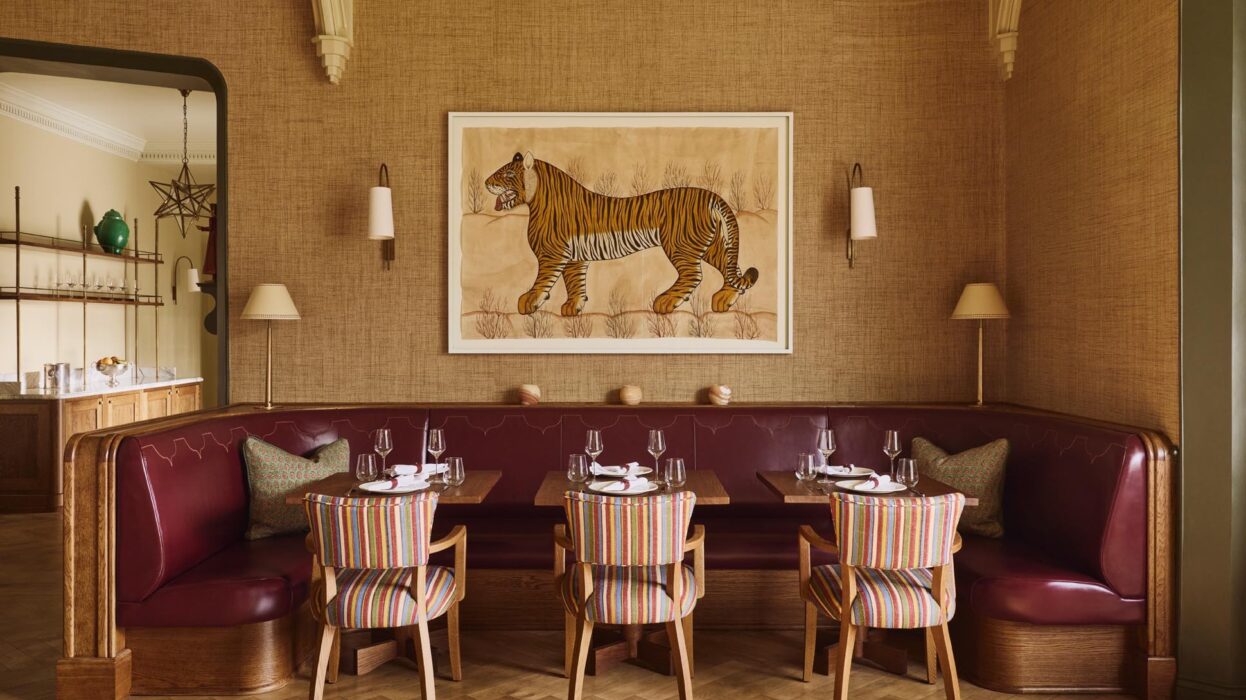
Lomri: When artwork helps create a destination.
One of our favourite examples is Lomri, the Indian restaurant developed as part of the transformation of The Manor House at Foxhills Club & Resort in Surrey.
The ambition was to create something very different from what guests might expect to find inside a traditional English country house. Lomri needed to feel like a restaurant in its own right, with a distinctive identity that could appeal to members, hotel residents and local guests.
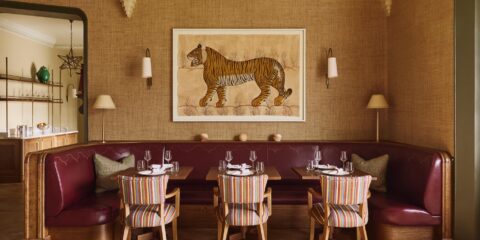
The artwork plays an enormous role in achieving that. Above one of the banquettes sits a striking image of a tiger. It’s bold, full of character and impossible to ignore. Elsewhere, a large mural overlooking the restaurant draws on Indian imagery and culture, helping establish the atmosphere of the space.
Together, these pieces do far more than fill the walls. They give the restaurant personality, reinforce the cultural direction of the concept and help create a visual identity that feels distinct from the wider country house setting.
This was particularly relevant at Foxhills because the development needed to change how people perceived The Manor House. The challenge wasn’t simply to refurbish a restaurant. It was to create new reasons for people to visit a building that had become underused by parts of the existing membership.
The restaurant therefore needed its own identity and a sense of occasion. Artwork helped bring that ambition into the physical environment.
See how we brought the Foxhills story to life.
The Manor House & Lomri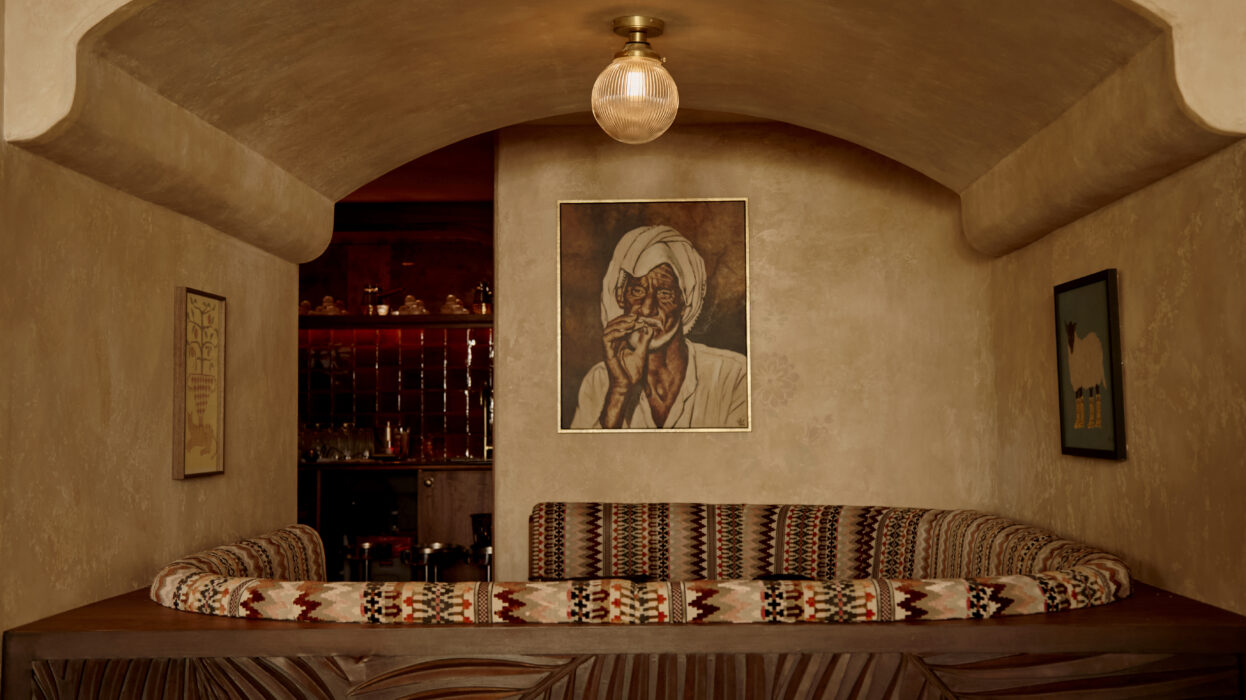
Noreen: Using art to tell a cultural story.
At Noreen in London’s St Christopher’s Place, artwork plays a different role. Noreen is a Middle Eastern restaurant inspired by the Arabian Peninsula and the Levant, with a concept built around warmth, generosity and the meeting of different cultural influences.
The artwork needed to feel connected to that identity. Rather than selecting generic pieces that simply complemented the interior palette, the restaurant features work created by a Bahraini artist and brought over specifically for the project.
That decision matters. It gives the artwork a connection to the cultural inspiration behind the restaurant, rather than using the region as a purely decorative reference.
One of the most distinctive pieces sits above the group dining table: an image of an older man smoking a cigarette. It’s full of character. It doesn’t feel like something chosen simply because it matches the furniture. It creates intrigue, has personality and adds another layer to the story of the restaurant.
For us, that’s an important distinction when developing concepts inspired by particular places or cultures. It’s very easy to create a restaurant that looks vaguely Middle Eastern, Mediterranean or Asian through a familiar selection of colours, patterns and decorative objects. But that doesn’t necessarily create an authentic or distinctive brand.
The stronger approach is to understand the cultural references behind the concept and think carefully about how they should be expressed. Art can introduce perspectives, character and stories that would otherwise be missing from the room.
Get to know Noreen. Every detail has a story.
Noreen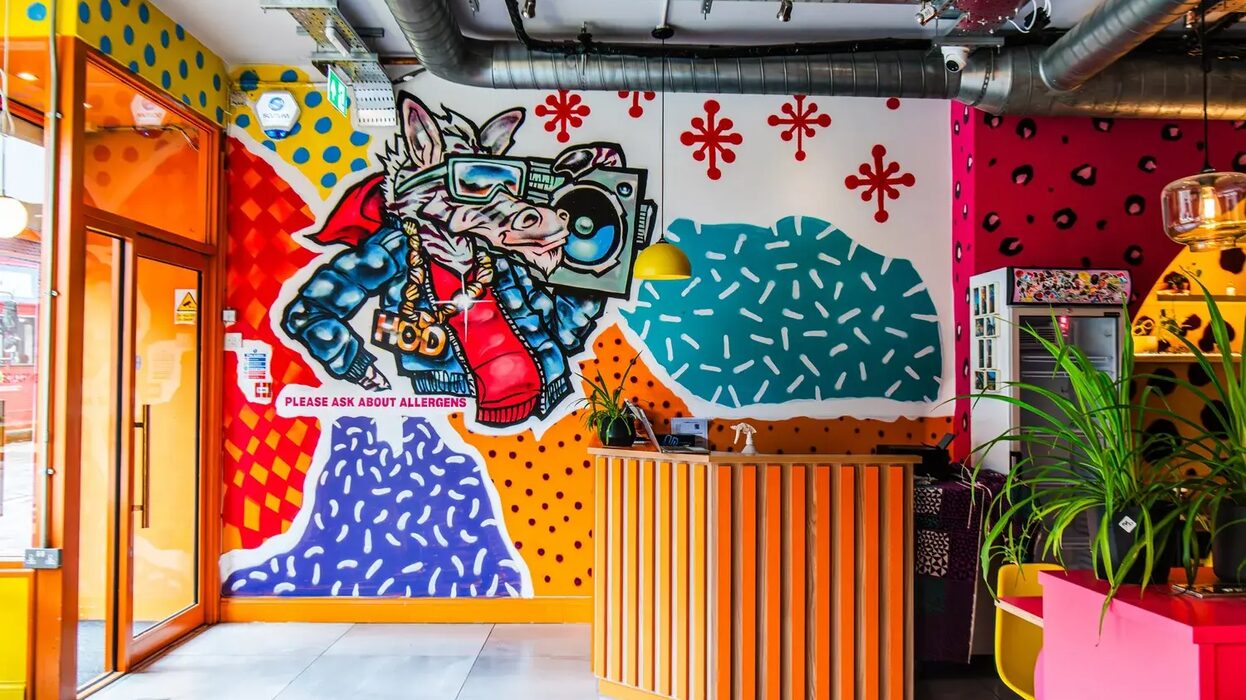
Homies on Donkeys: Art that reflects the attitude of the brand.
Then there’s Homies on Donkeys in Leytonstone. A completely different restaurant. A completely different audience. And a completely different approach to artwork.
Homies began life as a street-food business, building a loyal following around great tacos, hip-hop culture and a brand with plenty of personality. When the business moved into its first permanent restaurant, one of the challenges was making sure it didn’t lose the energy that had made people fall in love with it in the first place.
The restaurant needed to feel like Homies. Not a polished interpretation of a Mexican restaurant. Not something that could have been created for any other operator. It needed to retain its edge.
Throughout the space, graffiti-style artwork and murals bring humour, attitude and a slightly tongue-in-cheek personality into the environment. The artwork reflects the brand’s street-food roots and gives the restaurant a visual language that feels entirely different from Lomri or Noreen.
A refined piece of culturally inspired artwork that works beautifully at Noreen would feel completely wrong at Homies. Likewise, the irreverent graffiti at Homies wouldn’t necessarily make sense in a country house restaurant. Neither approach is better than the other. They’re simply right for different brands.
Small restaurant. Big personality. Meet Homies.
Homies on DonkeysGreat artwork isn’t about choosing what looks good. It’s about choosing what feels right for the concept.
What should you consider when choosing art for a hotel or restaurant?
When we’re working on hospitality development projects, we don’t believe artwork should be approached as a separate decorative exercise. It needs to be considered alongside the brand strategy, concept development and interior design. Here are seven questions we believe every hotel owner, developer or restaurant operator should ask.
1. What is the artwork supposed to achieve?
Before choosing a piece, understand its purpose. Is it there to create a statement? Tell a story? Reflect the location? Reinforce a cultural influence? Bring energy into the room?
Not every piece needs to achieve all of these things. But you should know why you’re choosing it. At Lomri, the artwork contributes to the restaurant’s strong visual identity. At Noreen, it adds cultural connection and storytelling. At Homies on Donkeys, it communicates attitude and personality. Three different purposes. Three different approaches.
2. Does it reflect the brand’s personality?
Start with the brand, not the artwork catalogue. If the concept is playful, rebellious and informal, the artwork should probably reflect that. If it’s elegant, understated and rooted in heritage, the approach may be very different.
We often talk about brand DNA when developing restaurant concepts: the characteristics that define how a brand should look, sound, feel and behave. Artwork should be tested against those same characteristics. Personal taste will always influence creative decisions, but the brand needs to come first.
3. Is there a story worth telling?
Some of the most interesting artwork has a connection to the concept that goes beyond its visual appearance. It might be commissioned from a local artist, inspired by the history of the building, connected to the restaurant’s cuisine or created specifically to express part of the brand’s story.
At Noreen, working with a Bahraini artist brought a connection to the cultural influences behind the restaurant. At Homies, the graffiti-style artwork reinforces the brand’s street-food origins. The story doesn’t need to be complicated. It just needs to be relevant.
4. Does the artwork work with the interior design?
The artwork, interior design and architecture should never feel as though they were developed independently of one another. A large mural can completely change the balance of a room. A statement piece might become the focal point around which seating, lighting and furniture are arranged.
The interior designer needs to understand the artwork, and whoever is developing the artwork needs to understand the design. The best results come when the concept team, brand designers, interior designers and architects are working from the same creative direction, not when each discipline completes its work and hands it over to the next.
5. Will it still feel relevant in five years?
Hospitality design can be heavily influenced by trends. While there’s nothing wrong with creating a contemporary space, we need to be careful about making decisions that will date quickly.
Homies on Donkeys is a good example. The artwork is bold, playful and irreverent, but that personality comes from the identity of the brand rather than a passing interior design trend. The more deeply the artwork is connected to the concept, the more likely it is to remain relevant.
6. How will guests experience it?
Artwork needs to work in the real environment, not just on a presentation slide. Will it be visible when guests enter? Is it positioned behind a key seating area? Will people encounter it as they move through the restaurant? Does the lighting support it?
Durability, cleaning, installation, safety, copyright and the long-term care of commissioned pieces should all be addressed before opening. A beautiful artwork that can’t withstand the realities of a busy restaurant isn’t necessarily the right choice.
7. Who needs to be involved in the decision?
Choosing artwork shouldn’t be left to one person at the end of the project. The decision should connect the owner or operator, the concept and brand team, the interior designer and, where appropriate, the architect and artist.
The concept team understands what the brand needs to communicate. The interior designer understands how it works in the room. The architect can address integration with the building. The operator understands the practical realities. The artist brings creative interpretation. The objective isn’t more subjective opinions; it’s alignment around the same outcome.
When should artwork be selected during a refurbishment?
Our view is simple. The conversation should start during concept development, not in the final weeks before opening. You don’t necessarily need to have every piece commissioned or selected at that stage. But you should know what role art is expected to play.
If a mural is going to define an entire wall, that needs to be considered before the interior design is finalised. If a statement piece will become the focal point of the restaurant, it may influence the furniture layout, lighting and even how guests move through the space.
If the artwork requires a specialist artist, bespoke production or international shipping, it needs to be included in the project programme and budget. Leaving those decisions until the end can lead to compromises: the right artwork may no longer be affordable, the installation might be difficult, or the design may not have allowed sufficient space for it.
Worse still, the project can end up with artwork chosen simply because something needed to go on the wall. That’s not concept development. That’s decoration.
How much should you budget for artwork in a hotel or restaurant?
There isn’t a single percentage of the refurbishment budget that works for every project. The right investment depends on the role artwork plays in the concept, the size of the venue, the type of pieces required and whether the work is commissioned, purchased or produced specifically for the space.
A large-scale mural created by an artist will have different costs from a collection of framed prints. A bespoke installation might require structural coordination, specialist lighting and ongoing maintenance.
The important thing is to recognise artwork as a defined part of the project budget rather than something funded from whatever remains at the end. Identify the key artwork opportunities early, establish an appropriate allowance and understand likely costs before the design is finalised.
Not every wall needs an expensive piece. Sometimes one strong statement artwork can have a greater impact than dozens of smaller items that don’t contribute anything meaningful to the brand. The aim isn’t to spend more. It’s to spend with purpose.
Should hotel artwork reflect the local area or the restaurant concept?
Ideally, it should reflect the identity you’re trying to create. For some hotels, that will mean celebrating the local area, its history, architecture or community. For others, particularly restaurants with their own independent brands, the artwork may need to reflect the concept rather than the hotel’s location.
Lomri is an Indian restaurant within a historic English country house. Its artwork supports the restaurant’s Indian-inspired identity rather than simply repeating the heritage of the surrounding building. Noreen uses artwork connected to its Middle Eastern cultural influences. Homies on Donkeys draws on the personality and origins of its brand.
The answer shouldn’t be determined by a rule that all hotels must use local art or that every restaurant should feature imagery connected to its cuisine. Sometimes local connection is the story. Sometimes cultural identity is the story. And sometimes the brand’s own attitude is the story. The important thing is knowing the difference.
How does artwork contribute to a restaurant’s commercial success?
We wouldn’t suggest that putting a mural on the wall automatically increases revenue. Commercial success is influenced by far more than artwork: the food, service, pricing, location, marketing and overall guest experience all play their part.
But artwork can contribute to the distinctiveness of a venue. It can help create a recognisable identity, give guests something memorable to associate with the restaurant and provide visual material that supports marketing and storytelling.
For a hotel restaurant trying to attract local guests, that distinctiveness can be particularly important. People need a reason to notice the venue, understand what makes it different and choose it over the alternatives.
A statement mural won’t rescue a restaurant with no identity. And an expensive collection won’t compensate for a brand that doesn’t know who it’s trying to attract. The value comes from how the different elements work together.
The best hospitality spaces feel like everything belongs.
One of the things we pay particular attention to at Auden is the connection between the different elements of a hospitality concept. The brand, the food, the drinks, the service style, the music, the interior design and the artwork should all feel like parts of the same experience.
That doesn’t mean everything needs to match. In fact, some of the most interesting spaces use contrast deliberately. But there should be a reason behind the choices.
The tiger at Lomri, the Bahraini artwork at Noreen and the graffiti at Homies on Donkeys couldn’t be more different. Yet each makes sense in the restaurant where it belongs.
And that’s what we believe good concept development should achieve. Not simply a collection of attractive elements. A space where every detail contributes to the identity of the business.
When the brand, the design and the artwork are all telling the same story, guests don’t need someone to explain the concept. They can feel it.
For hotel owners and developers planning a refurbishment or new restaurant, we’d encourage you to think about artwork much earlier in the process. Don’t leave it until the walls are painted and the furniture has arrived.
Ask what role it should play, what story it needs to tell and how it can make the concept more distinctive.
Because on opening day, guests won’t see the months of concept presentations, design reviews and brand workshops that went into the project. They’ll see the finished space. And the artwork will be part of the story it tells.
Bring your restaurant concept to life.
At Auden Hospitality, we connect strategy, concept development, brand identity and operational thinking to create restaurants and bars with a clear purpose. From the first idea to the details guests experience on opening day, we help ensure the concept makes sense in the space.
More of what we’re talking about.